
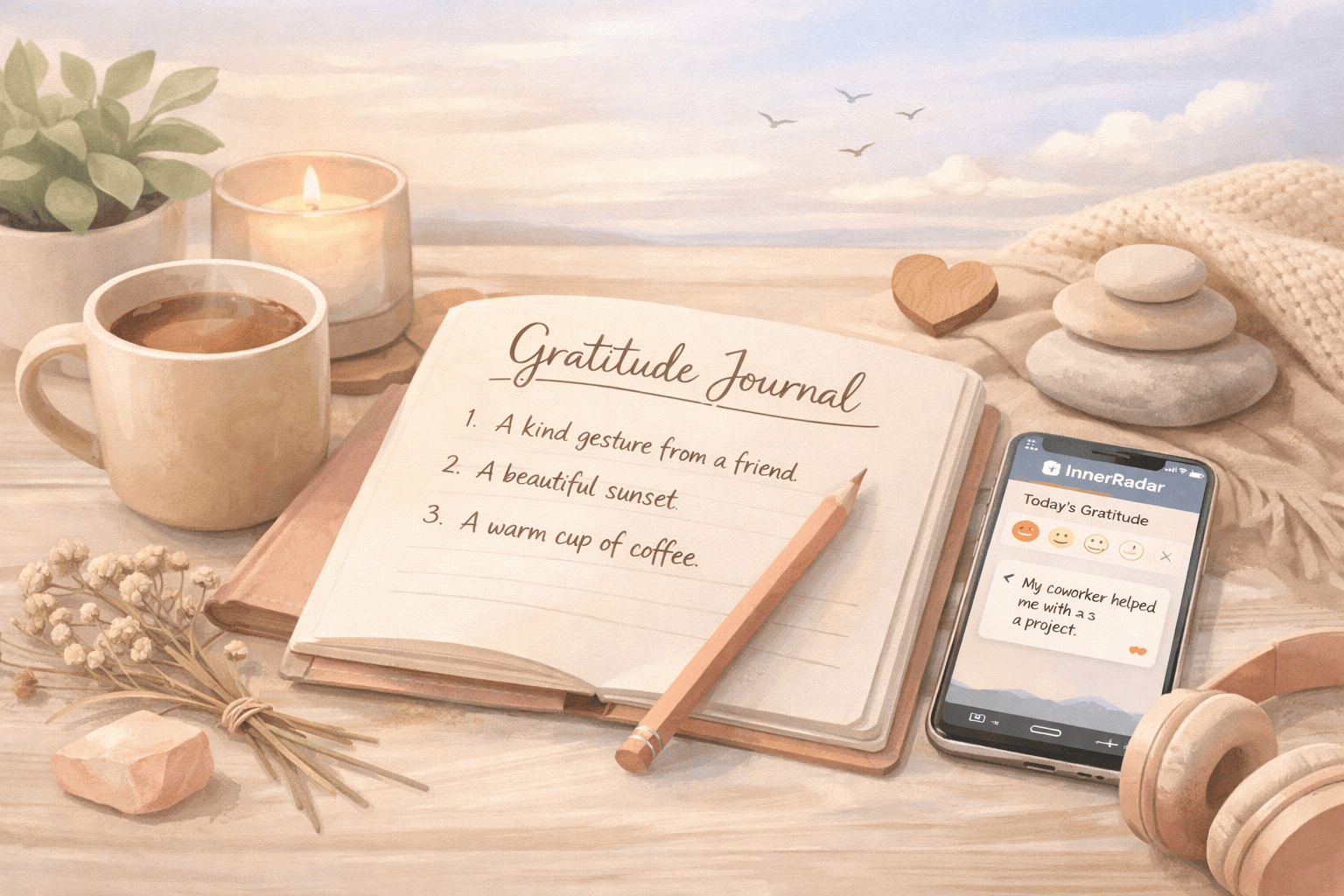
Gratitude Journal: The Science‑Backed Habit That Improves Mood, Sleep, and Resilience (With Prompts)
Gratitude journaling is a simple daily practice: you write down what you appreciate—people, moments, small wins, lessons, or support you noticed today. It sounds basic, but research consistently links gratitude interventions (including journaling) with measurable improvements in well‑being, mood, and life satisfaction, plus small reductions in anxiety and depressive symptoms.
If you want an easy way to feel more grounded, more present, and less reactive, a gratitude journal is one of the highest‑ROI habits you can build.
What is a gratitude journal?
A gratitude journal is a dedicated place—paper or digital—where you regularly record things you’re thankful for and why they matter. Many evidence‑based approaches emphasize specificity (what happened, who was involved, what it means to you) and consistency over writing long entries.
Benefits of gratitude journaling (backed by research)
1) Better mood and higher life satisfaction
Systematic reviews and trials show gratitude interventions tend to increase positive affect, happiness, and life satisfaction.
2) Less stress and more resilience under uncertainty
Gratitude can help people reframe stressful periods and regain a sense of control—especially when life feels unstable.
3) Better sleep quality
Gratitude is associated with improved sleep quality, and research suggests it may work partly by improving pre‑sleep thoughts (less rumination, more calming focus).
4) Potential physical health support (including heart‑related markers)
Large observational research and clinical pilot studies suggest gratitude correlates with better health outcomes and may influence biomarkers (though more research is still needed).
5) Digital gratitude tools can work too
If you prefer journaling on your phone, evidence suggests digital tools can still be effective.
How to start a gratitude journal (that you’ll actually stick with)
Keep it tiny (2–5 minutes)
Consistency beats intensity. Write 3 items a day or 5 items 3× per week—both are valid approaches.
Get specific (and personal)
“Coffee” is fine. But “My friend checked on me today and I felt supported” tends to land deeper.
Try “subtraction” prompts occasionally
Reflect on what life would be like without something you value—this can boost appreciation.
Do it before bed if sleep is your goal
If your main pain point is rumination at night, gratitude entries can be a gentler pre‑sleep focus.
Gratitude journal prompts (copy/paste)
Use any of these as daily prompts:
- What went well today—and what did I do to help it happen?
- Who helped me recently? What exactly did they do?
- What did I learn today that will help “future me”?
- What small comfort did I notice (warmth, food, music, quiet)?
- What challenge protected me or taught me something useful?
- What would I miss most if it disappeared tomorrow? (subtraction)
- What moment made me feel connected to someone?
- What part of my body/health supported me today?
- What did I take for granted before that I now value?
- What am I proud of from the last 24 hours?
Common mistakes that make gratitude journaling feel “fake”
- Being vague (“family, health, work”) instead of specific moments
- Forcing positivity (gratitude is not denial; it can coexist with hard feelings)
- Turning it into homework (keep it short; increase later)
How InnerRadar.app makes gratitude journaling easier
If you’re building a habit, the best journal is the one you’ll use consistently. A digital gratitude journal like InnerRadar.app can help you:
- Journal anywhere (phone, tablet, desktop) with sync across devices
- Add context: mood + a short note to connect gratitude with your emotional patterns
- Spot themes over time: what reliably improves your mood, what drains it, what supports you (relationships, routines, environments)
This turns gratitude from “a nice idea” into a feedback loop you can actually learn from.
FAQ
Does a gratitude journal really work?
Overall, studies find gratitude interventions tend to improve well‑being and happiness with small‑to‑moderate benefits depending on the population and method.
How often should I write?
Start with 3 entries per day or 3 days per week. Consistency matters more than volume.
Can gratitude journaling help anxiety or depression?
Research suggests small reductions in depression/anxiety symptoms in some studies, but it’s not a replacement for professional care if you’re struggling.
What should I write in a gratitude journal?
Write what happened, why it matters, and how it made you feel—especially focusing on people and specific moments.
Sources
- Greater Good in Action – Gratitude Journal Practice Guide https://ggia.berkeley.edu/practice/gratitude_journal
- UCLA Health – Health Benefits of Gratitude https://www.uclahealth.org/news/article/health-benefits-gratitude
- PMC Systematic Review – Effects of Gratitude Interventions https://pmc.ncbi.nlm.nih.gov/articles/PMC10393216/